
Axis Bank's acquisition of Citibank's consumer finance business for Rs 12,325 crore - the second biggest deal in the Indian banking sector - is seen as a good deal at a good price. The acquisition enables Axis Bank to close the gap with competition in some key segments such as credit cards. At the same time, there are some key issues that are crucial for the deal's success, apart from the fact that it will take some time for Axis to reap the full harvest of its investment.

Firms have to adhere to strict compliance requirements mandated by global parents

FIIs accumulated India's top-listed companies at an average valuation of around 16 times.

Risk-averse investors can hold up to 10 per cent of their portfolio in gold, while aggressive ones can keep five per cent.

HUL, UltraTech, Asian Paints, L&T, HDFC Bank top global valuation charts

Unless companies press the pedal on implementation, further stock price gains might be limited, says Hamsini Karthik.

Centre took Rs 1,002 bn from here in 2017-18, sharply up from Rs 904 bn a year before and Rs 123.6 bn in FY14

In the past 12 months, such earnings have grown in double digits in Europe, the US, Japan and South Korea.
The banking, oil and metal sectors were the top sectoral losers on the BSE, while IT stocks rendered support at lower levels.

Market hopes govt will hike capital expenditure.

Crude oil prices have more than doubled, pushing up India's import bill and raising fears of a higher current account and fiscal deficit. This will impact corporate earnings.

Tech Mahindra was the top loser in the Sensex pack, shedding over 3 per cent, followed by NTPC, IndusInd Bank, Kotak Bank and Reliance Industries. NSE Nifty fell 185.60 points to 17,671.65.

The retail inflation, which is factored in by the RBI to arrive at its monetary policy, has been on decline since last month. The previous low was 5.54 per cent in November 2019. The government has asked the RBI to restrict the inflation around 4 per cent, with a margin of 2 per cent on the either side.

Oil and gas sectot may not put up good numbers in Q4.

BSE's, NSE's overnight liquid fund facility can help stock investors maximise returns

Experts expect the trend to continue in the near term.

While Raghuram Rajan has said in the past that other factors, including domestic fundamentals, outweigh the US Fed policy meet, this time it would be different

The fallen bellwether of the technology sector has a strategy to reclaim its lost position.

Check out some of the stocks that will react on the basis of their numbers in the near term.

Second-tier NBFC stocks are trading at 24.4x their trailing earnings, which is nearly twice their 15-year average of 13.9x

'It was because of the huge selloff in the Indian equities that the rupee fell so sharply against the dollar on Friday.'

The management, however, is a bit wary about near-term performance.

Gold prices are struggling and are down 18 per cent from their March highs. But stock prices have fallen even more. As a result, the precious metal has begun to outperform equities - both in the domestic market and international markets. Gold prices are up 2.6 per cent in the domestic market in the current calendar year (CY22) so far, according to the World Gold Council (WGC), compared to a 1.7 per cent decline in the Sensex year-to-date (YTD).

While most analysts remain positive on TCS and Infosys, they are cautious on Wipro.

With India's imports exceeding exports, weak rupee does more harm than good. Analysts, however, say that rupee depriciation is positive for export-oriented sectors such as IT services, pharmaceuticals, textiles and automobiles

This analysis is based on the quarterly earnings for 724 companies.

Build up inflation rate in the financial year so far was 2 per cent compared to a build up rate of 4.56 per cent in the corresponding period of the previous year. Inflation in food articles as a group rose to 11.08 per cent during the month as against 9.80 per cent in the previous month, mainly driven by exorbitantly high onion prices, the rates of which spiked by over 172 per cent from a year-ago. The annual rate of inflation, based on monthly wholesale price index was at 0.16 per cent in October.
During the month, inflation in vegetables shot up to 35.99 per cent, as against 26.10 per cent in October. Likewise, the prices of cereals and eggs grew at a faster pace of 3.71 per cent.

Analysts say strengthening bank's capital will boost earnings, bank needs chief with long stint to run show

After years of losing money on two of the group's biggest bets - global steel business and domestic passenger cars - there are strong signs of a revival in both businesses.

The Sensex and the Nifty witnessed biggest one day loss in percentage terms since June 24

The sector is witnessing weak tendering.

The Union government will gain close to Rs 1.6 lakh crore in additional revenues this fiscal from a record hike in excise duty on petrol and diesel that has pushed the total incidence of taxation on auto fuels to 70 per cent of the price. Late on Tuesday evening, the government hiked excise duty on petrol by Rs 10 per litre and that on diesel by Rs 13 a litre to mop up gains arising from international oil prices falling to a two-decade low.
A financial turnaround in Tata Steel and Tata Motors has come as a shot in the arm for Chandra.

Softening rural consumption and the likelihood of weak corporate earnings in the March quarter saw investors dump stocks.

With a loan book of $268 billion, India's retail banking is now ahead of Russia, Malaysia and Mexico but behind China, Brazil and Thailand

The markets gained nearly 7 per cent in the 4 trading sessions of March.

Reports have suggested Rs 400-650 as the possible IPO price
An action on the rate front is unlikely to figure in Rajan's plan for the moment.
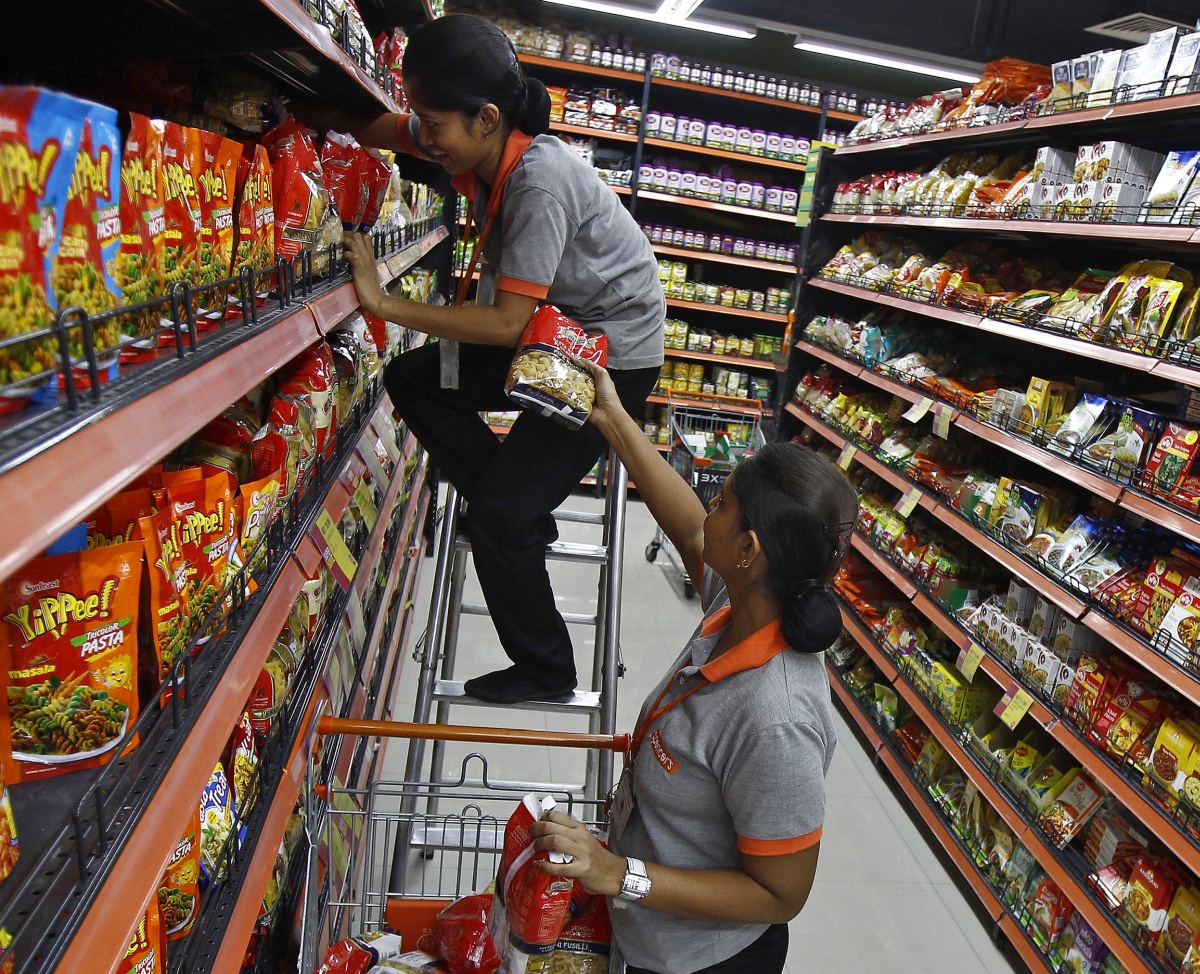
However, rural demand continued to remain a concern for FMCG companies during the quarter.
